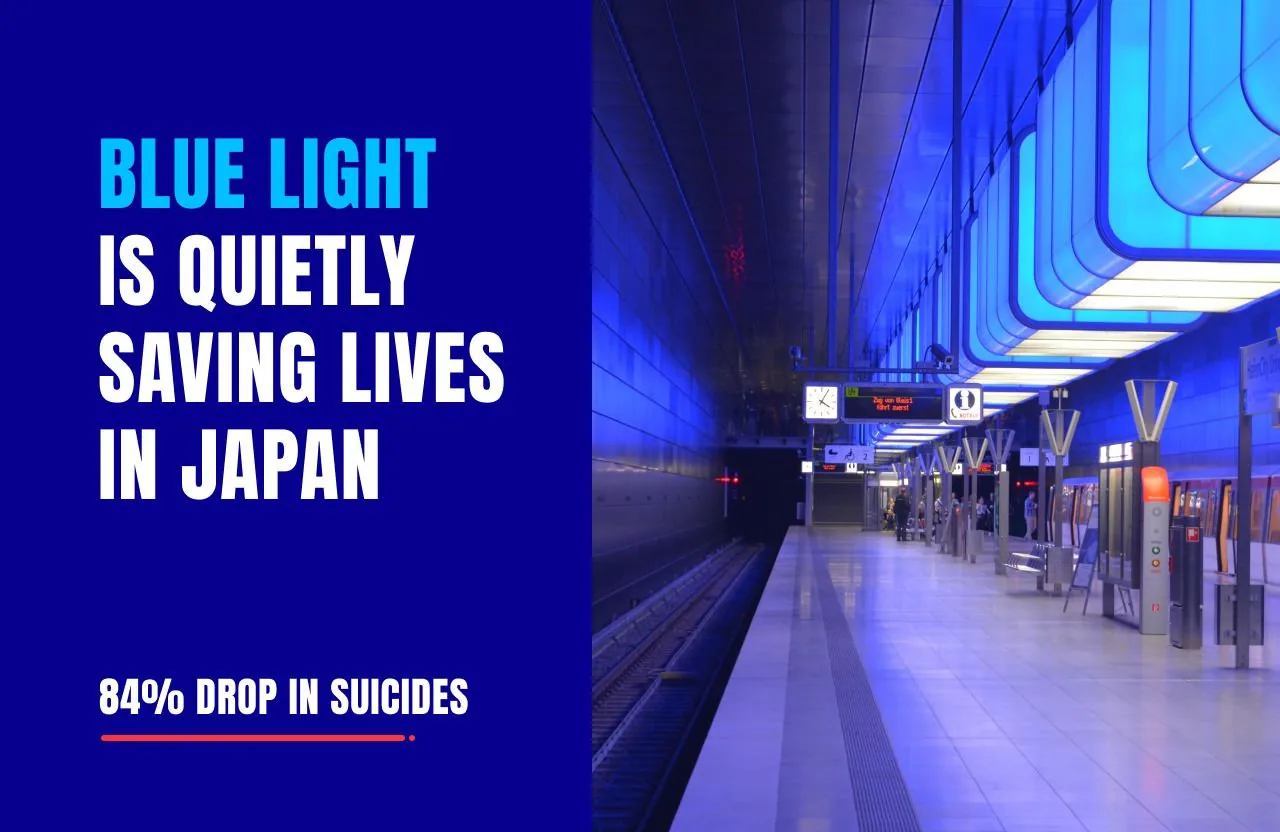
Blue Lights, 84% Fewer Suicides: A Quiet Breakthrough in Behavioral Design
In Japan, railway stations have taken a subtle but powerful step toward suicide prevention:
Installing blue LED lights on train platforms.
A 2009 study found that stations with blue lights saw an 84% drop in suicides.
Why would such a small change have such a big impact?
🧠 The Behavioral Psychology Behind Blue Light
Calming Effect
Blue is often associated with calmness and serenity. It can help ease anxiety and reduce impulsive decisions in moments of emotional distress.
Association with Safety & Authority
In Japan, blue lights are used in public safety contexts—such as with police or emergency services—possibly signaling security or deterring harmful actions.
Circadian Rhythm Influence
Blue light influences alertness and mood. Short-term exposure may increase serotonin and reduce depressive feelings, particularly at night.
🚉 How It’s Implemented on Train Platforms
🔹 Location: Typically placed at the ends of platforms—where suicide attempts are most common.
🔹 Timing: Activated during evening and night hours, when risk is higher.
🔹 Discreet: No surveillance or direct intervention required—just quiet, persistent presence.
📊 What the Research Says
A 2009 study published in the Journal of Affective Disorders looked at 71 stations:
84% reduction in suicides at blue-lit stations
While causality wasn’t confirmed, the correlation was compelling
⚠️ Important Limitations
While effective, blue lights are not a complete solution:
🔸 They may offer temporary or symbolic relief
🔸 They don’t treat underlying mental health conditions
🔸 Experts advocate combining them with stronger measures—like platform barriers and mental health services
🌍 Design That Listens. Design That Saves.
This is behavioral and human-centered design in action.
It’s a reminder that even small, empathetic interventions—rooted in psychology—can profoundly shape behavior and save lives.